Time To Read
Date Last Modified
Pl. IV · FAM. DENSIDAE
Densus rectus var. lineus
captain lengthwise · dense regular connective tissue
The plate
The specimen, drawn
Pl. IV

Every bundle running the same way, and the cellsThe basic structural and functional units of life. squeezed into rows between them. Enormous strength in one direction and almost none in any other.

Habitat & range
Where it lives
Body map

Dense regular is tendon and ligament — anywhere a pull arrives along a known line.
Range
- Every tendon, joining muscle to bone.
- Every ligament, joining bone to bone.
- The four ligaments of the knee, and the rotator cuff at the shoulder.
- The Achilles tendon, the thickest in the body.
- Aponeuroses — flat tendon sheets, as in the abdominal wall.
Collection record
- Add your slide numbers here.
Niche
What it does for a living
Resisting a pull that always comes from the same direction. Collagen is enormously strong in tension and useless in compression, so dense regular tissue simply lines every fibre up with the load. The cost is that it is weak to anything off-axis, poorly supplied with blood, and therefore slow to heal — which is why a torn ligament is a season and a cut muscle is a month.
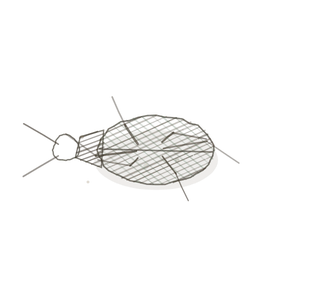
field collected specimen
How to know it on sight
- Thick pink collagenA structural protein in the dermis that provides strength and elasticity. bundles, all parallel, filling the field.
- Fibroblast nucleiClusters of neurons in the CNS responsible for processing information. flattened into dark lines, squeezed in rows between the bundles.
- Almost no open space and almost no visible blood vessels.
- Turn the slide and the whole field changes brightness at once — everything shares one direction.


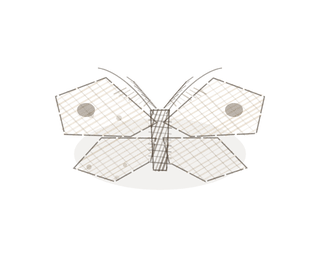
People keep calling her by the wrong name
Look-alikes
Two plates. Read the line underneath each one before you decide.
Dense irregular connective tissue

Same bundles, same stain, same density — the only difference is direction. Regular has one; irregular has all of them.
Elastic connective tissue

Elastic fibres are also parallel but thinner, wavier and darker in Verhoeff; collagen bundles are thick, straight and pink.
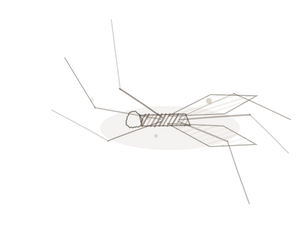
Examine it yourself
The virtual slide
This is tendon cut lengthwise. Find the fibroblast nuclei — they are the only things that are not collagen — and notice that they have been pressed into single-file lines by the bundles on either side.
Virtual slide courtesy of Histology Guide.
YOur missions
Field Notes for Future Missions
Mission 1: one direction
Mission 2: quick check
Field notes
Why this organism
Flax is grown to be pulled. The stems are tall, straight and unbranched, and after retting and combing the fibre comes out as a hank in which every strand lies parallel to every other — which is what makes linen rope strong and what makes it fray if you cut across it. A tendon is a hank of flax with a blood supply. Line everything up with the load and you get remarkable strength; ask it to take a force from the side and you find out what you traded away.
Next · Pl. V
Densus confusus var. textor
the basketweaver · dense irregular connective tissue.
Hop to:
← Epithelial Tissues: A Guided Journey
All plates — The Tissue Field Guide: Epithelium
Frontispiece Ordo Epithelia (main page)
Pl. I · Simple squamous
Pl. II · Simple cuboidal
Pl. III · Simple columnar
Pl. IV · Stratified squamous
Pl. V · Stratified cuboidal
Pl. VI · Stratified columnar
Pl. VII · Transitional
Pl. VIII · Pseudostratified columnar
Epithelial Identification Game
All Modules
- Anatomical Language, Membranes & Homeostasis
- Just Enough Chemistry
- The Cell & Its Transport
- Making Cells & Proteins
- The Integumentary System
- The Skeletal System
- The Muscular System
- Nervous Tissue & the Senses
- The Spinal Cord
- The Brain & the Blood–Brain Barrier
- The Autonomic Nervous System
- The Special Senses
- The Endocrine System
- Blood
- The Heart
- Blood Vessels
- The Digestive System
- The Respiratory System
- The Urinary System
- Fluids, Electrolytes & Acid–Base Balance
- The Reproductive System
- The Immune System
List of terms
- cells
- collagen
- nuclei